
How To Go Vegan For Beginners: 15 Tips

You may be interested in going vegan after watching a documentary or it’s just something you’ve been interested in for a while.
So, as a new vegan (for just over a year now), I want to share with you my tips to go vegan for beginners.
What is Veganism?
Being vegan is more than just a diet – veganism is about reducing animal cruelty and exploitation. This means avoiding all animal products in your diet and avoiding the contribution to animal cruelty.
More specifically,
- Not wearing animal products – leather, wool, silk
- Not participating in animal exploitation – going to zoos, stampedes, the circus
- Not purchasing products contributing to animal testing – beauty products, toiletries
- Not eating products such as cheese, honey, and dairy
What Are The Different Types of Vegans?

Ethical Vegan
Ethical vegans choose veganism to avoid animal cruelty of any kind. This includes avoiding all animal products (meat, dairy, eggs), animal-derived products (gelatin, ghee, wool, etc), or anything that supports animal suffering and exploitation.
Religious Vegan
Religious vegans follow a vegan diet and lifestyle for religious reasons.
For some religions, this is something that’s done short-term while fasting (Greek Orthodox) while other religions (Jainism) follow a more strict vegan diet.
Some Buddhists also follow a vegan diet, while many Hindus follow a vegetarian diet.
Health Vegan
This is where people choose a whole food plant-based diet purely for health reasons.
This consists of avoiding processed foods and eating only healthy ingredients in their whole form. They avoid all oils, sugar, white rice/pasta and anything processed.
Environmental Vegan
Meat and dairy production account for 83 percent of all agricultural land use, take up 30 percent of the planet’s land surface and are responsible for 18 percent of greenhouse gases, including methane and nitrous oxide. – DavidSuzuki.org
This is the primary reason many environmentalists choose a vegan diet and lifestyle.
This post contains affiliate links. This means I may earn a small commission if you decide to make a purchase through my links, at no extra cost to you. Read disclosure here for more info.
15 Tips For Beginners on How To Go Vegan

1. Know Your Why
Going vegan is not a diet – it is a full lifestyle change. So, knowing your why is extremely important if you want to stick to it. Therefore, if you’re having a hard time adjusting you can go back to your why to get you on track.
For me, my main why is to prevent animal cruelty, especially in the factory farming industry. So, if I ever need a reminder of this I just watch a vegan documentary.
Your why might be for other reasons. Protecting the environment and doing what you can for climate change or for health reasons such as lowering cholesterol.
Knowing your why is powerful when it’s something that you are deeply passionate about. This allows you to stick to your vegan journey much easier.
2. See a Nutritionist

If you’re able to see a nutritionist (who specializes in a vegan diet) or dietician I strongly recommend it. They will be able to help you create a vegan diet plan that you enjoy and can stick to.
Personally, when I first went vegan I started getting a lot of headaches. The best part though is my nutritionist uncovered the reason (I wasn’t getting enough protein). She recommended a couple of simple switches and I was back to normal instantly.
What I did, based on her recommendations:
- Switched my almond milk for soy milk (loads more protein)
- Went from adding a sprinkle of hemp seeds to my oatmeal to 1 TBSP
- Had a high-protein snack every single afternoon
That’s it!
By the way, if you’re live in Canada or the US and looking for a plant-based dietitian check out Alyssa Fontaine – founder of Plant-Based Dietitians.
3. Get Blood Work From Your Doctor
You can do this just before going plant-based and a few months later.
The important thing is to ensure you’re getting all the proper nutrients and to also look at other key metrics such as your B12, iron, and cholesterol levels.
Many people who have high cholesterol before starting a vegan diet, will find their cholesterol drops after. A recent study notes that…
“Plant-based diets are associated with a 7% reduction in total cholesterol and a 14% reduction in all artery-blocking lipoproteins, thereby reducing the risk of cardiovascular disease for people who maintain such a diet for at least five years.” (source)
4. Look for vegan alternatives
Using plant-based foods as alternatives for your favorite go-to proteins is a great strategy when you are a newbie to a plant-based diet.
You can pick up:
- Vegan pizza
- Plant-based meat substitutes such as Impossible Burger or Beyond Meat
- Vegan cheese, yogurt, sour cream, coffee creamer
- Vegan chicken, crab, etc
- Ice cream
Now, for some of the above alternatives, I recommend eating in moderation as you ultimately want to aim for a healthy whole food plant-based diet.
But, when you’re first starting out it’s nice to try some alternatives to make your food prep a little easier.
There are also many other alternatives that I want to highlight as they are really good to make or have on hand!
Eggs
For baking use ground flaxseed and water to make a ‘flax egg’.
To make one ‘egg’ combine 1 TBSP of ground flax seeds with 3 TBSP of water. Stir to combine and let sit for about 5 minutes.
If you’re in the mood for scrambled eggs, try scrambled tofu.
Want an omelette – try a chickpea flour omelette with lots of veggies.
You can also try JUST Egg.
Honey
Instead try maple syrup, stevia, agave or date syrup.
Fish
If you love fish there are a few ways you can feel like you’re still getting your fishy fix.
Miso soup and veggie sushi (my go-to sushi has yam tempura, asparagus, avocado and cucumber). It’s sooo good.
5. Try some new vegan recipes
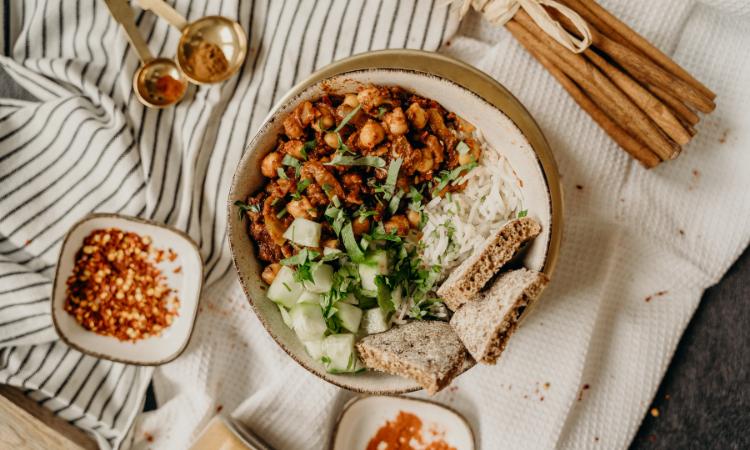
The best part about becoming vegan is trying loads of new recipes. If you’re used to the standard American diet, you’ll be amazed at how much tastier plant-based recipes can be.
I recommend giving different cuisines a try – such as Thai, Indian, Middle Eastern, Chinese, and Greek.
Also think about recipes you have always loved (mac & cheese, mashed potatoes, chili, shepherd’s pie).
There are literally vegan recipes for all your comfort food favorites. You might even find that you prefer the vegan version of your favorite dish!
To get you in the mood – you have to check out this vegan red lentil curry recipe, by Nisha from Rainbow Plant Life. It is AMAZING and made in the Instant Pot to make your life easier.
6. Get Your Essential Nutrients
A common misconception is that you can’t get your essential nutrients from eating a vegan diet. I am here to tell you that this is exactly NOT the case.
It is, however, important to consider a vegan multivitamin if you are not getting everything you need every day of the week – hey we’re not all perfect right?!
I use this vegan multivitamin that includes B12, iron, vitamin b 12, vitamin d 2, calcium, zinc and more. (This was recommended to me by my dietitian)
Tip: Get familiar with what food groups have the most nutrients, then when you’re making any meal mindfully add nutrients to your meal that you most likely didn’t think about when eating animal products.
For example:
- I love hemp seeds. They are high in protein and B12 and taste great in a smoothie, sprinkled in granola, salads, or your morning oatmeal.
- Add dark, leafy greens to as much as possible – Kale, spinach, collard greens – get to knwo them all and eat them all! They are filled with nutrients (fiber, vitamins A, C, E and K, and B-vitamins), and are good for your gut health.
7. Stock Your Pantry
Stocking your pantry with vegan ingredients is pretty easy, as I bet you already have a lot of ingredients that are vegan. I’m talking about:
- Dried lentils
- Chickpeas, black beans, kidney beans, etc
- Nuts and seeds
- Corn
- Rice
So, have a look at what you already have on hand.
Then you can introduce some new vegan pantry staples like nutritional yeast (adds a lovely cheesy flavor to dishes), hemp seeds, coconut milk, tempeh, tofu, plant milk, tahini, chickpea pasta, etc.
Having lots of healthy plant-based foods on hand ensures you can whip up easy vegan meals on weeknights or a more extravagant meal for special occasions.
The best thing is that many of these vegan pantry items are super affordable, are extremely nourishing, and can add so much flavor and protein to meals.
8. Find your go-to plant-based milks
This is honestly what held me back from going vegan for a long time. I just didn’t know how my strong ‘proper English’ cup of black tea and milk could be any good with plant-based milk.
But shockingly, I have found 2 amazing milks that are perfect.
Earth’s Own – Oat Milk Original (unsweetened) – only in Canada
Next Milk – Made by Silk. I was shocked that this literally tasted like cow’s milk – but without the suffering. Win-win! – available in the US and Canada
9. Meal Prep

When you’re getting used to a new way of eating, meal prep is essential.
You don’t want to find yourself wondering what on earth to eat at the end of a long day, especially when you’re learning about a new way of cooking and eating.
Here are some recommendations for meal prep:
- Choose a prep day on the weekend, or when you have time
- Make a soup or stew – if you like variety try making 2 soups or stews so you can freeze half to have another time.
- Cook some rice and/or potatoes
- Make 2 proteins (roasted chickpeas, marinated roasted tofu, etc)
- Chop up some veggies in advance – so you can have them with hummus or to add to meals
- Wash and prep lettuce/spinach/kale so you can easily make a quick salad
There are loads of vegan meal prep videos on YouTube you’ll be able to find.
10. Take Food With You
Whenever you’re out and about, it’s a good idea to have snacks on hand at all times.
I don’t know about you but I get “hangry” if I miss a meal! It’s also a good idea if you don’t know whether there’ll be food options wherever you’re going.
My go-to’s:
- Nuts and seeds
- Dates
- Fruit (apple or pear)
- Carrot and celery sticks with hummus
- Vegan granola bar (I love this one)
- Sandwich
When you are prepared it makes going out a lot easier. Also, if you are someone who loves your food, it prevents you from feeling sad or left out if you can’t eat.
11. Transition at your own pace
Some people will want to go cold turkey and remove all non-vegan foods from their diet immediately, while others feel more comfortable taking baby steps and starting with a slower approach.
When you’re going vegan as a beginner, there is no race here and no one is keeping score. So, if your ultimate goal is to go fully vegan do what works best for you.
Here are a few things you can try if you want to slowly transition to a vegan diet:
- Start with one vegan day a week, then increase to more days over time.
- Have all vegan food until dinner + 1 vegan dinner per week
- If you’re not yet a vegetarian, do this first – then overtime you can slowly remove eggs, milk, and cheese.
With each scenario above you can slowly increase the number of vegan meals you have so think about your personality, your habits, and what might work best for you.
Note: If you slip up – that is completely OK. None of us are perfect, but instead of letting that make you fall off the wagon completely, just keep going.
12. Make sure you’re getting enough calories
Plant-based foods have fewer calories than meat products, so it’s good to be aware of your calorie intake.
As a vegan, you should not feel hungry all the time – this just means you need to eat more.
For example, 100 grams of chicken is 239 calories, while 100 grams of lentils is 116 calories.
So get familiar with what you’re eating and fill your plate accordingly. As mentioned earlier – working with a dietician will help you with this too.
13. Change Your Mindset
Don’t think about what you can’t eat – instead, think about the new foods you are adding to your diet.
Think of your vegan journey as supporting your values, contributing to the planet in a positive way, not taking advantage of innocent animals, and focusing on your health.
Your mindset is directly tied to your why. When you follow through on something you are passionate about and think about your why, it will bring you great joy and satisfaction.
And this is what will help you stay on track for the long term.
14. Find Community
When starting out as a beginner vegan it’s a great idea to talk to and hear from like-minded people who are on the same journey.
There are many Facebook groups out there that provide great support.
Here are the few that I’ve joined, but there are a ton more:
- Plant-Based Whole Food Lifestyle for Beginners
- Vegans Living with Non-Vegans
- Canadian vegetarians and vegans
You can also type in the name of your city + vegan and you’ll find local groups. Can’t find one? Consider starting your own!
15. Tell Your Non-Vegan Friends and Family
You might feel stressed about sharing your new vegan lifestyle news, but it’s still a good idea to share this with those you are closest to.
It will make your life easier when going out if people know and it will also give you the opportunity to answer questions – as people will have them!
Where to Find Vegan Ingredients
These days most grocery stores have a ton of plant-based ingredients, however, depending on where you live there may be times you have a hard time finding some items – like miso paste, extra firm tofu, tempeh, nutritional yeast, Thai curry paste, etc.
When this happens try going to an Asian or Indian grocery store (depending on what you’re looking to make) and pick up what you need. And if you’re a foodie like me, you’ll love seeing the vast amounts of ingredients at your fingertips.
You can also buy a lot of ingredients online.
Here are my fave vegan ingredients I personally pick up on Amazon in case you’d like to try them…
- Bob’s Red Mill Nutritional Yeast
- French Puy Lentils
- Hemp Seeds
- Liquid Smoke
- Organic Rolled Oats (non-GMO)
Apart from Amazon, there are some other excellent online stores that offer vegan food…
USA
In Canada:
How To Go Vegan For Beginners: Recap & Next Steps
I hope you found these tips and tricks helpful. Personally, as a new vegan, I’m still learning, but these tips have really helped me stick with it this year.
Let’s recap these tips again:
- Know your why
- See a nutritionist
- Get blood work from your doctor
- Look for vegan alternatives to your favorite foods
- Get cooking & try some new vegan recipes
- Get your essential nutrients
- Stock your pantry
- Find your go-to plant-based milk
- Meal prep
- Take food with you
- Transition at your own pace
- Make sure you’re getting enough calories
- Change your mindset
- Find community
- Tell your non-vegan friends and family
Next steps: Think about how you want to start your vegan lifestyle journey and simply start! You will slip up, you will learn new things along the way and you will do what’s right for you.
I’d love to know…
Where are you on your vegan journey?
Are you a complete beginner? Haven’t tried yet? Been vegan in the past and want to start again?
Share in the comments below along with any questions or tips you have.
